How to Plan a Half Marathon Weekend
A Half Marathon Weekend: A Group Travel Itinerary That Works balances race preparation with relaxed travel, shared meals and enough recovery time. For a UK run club, the best plan allows members to arrive at different times, collect race packs without rushing, travel easily between accommodation and the start, and enjoy the weekend together.

What should a half marathon weekend itinerary include?
A successful itinerary usually covers three nights: arrival and settling in, race preparation, race day and departure. It should offer structure without making every hour compulsory. Club members may have different budgets, flight times, fitness levels and preferences, so build in clear meeting points alongside plenty of personal time.
The itinerary below is designed for a UK run club organising its first overseas or domestic group race weekend. It can be adapted for a city race such as the Malaga Half Marathon 2027 , or used as a framework when comparing destinations through ActiveXplore Travel .
The key planning principles are:
- Choose accommodation with straightforward access to the race start.
- Keep arrival day light and flexible.
- Schedule race pack collection before the final evening.
- Make the shakeout run optional and genuinely easy.
- Protect recovery time after the finish.
A practical three-night race weekend itinerary
Friday: Arrival, check-in and an easy first evening
Members will rarely arrive together. Some may travel before work, while others may take an afternoon flight or drive after lunch. Avoid making the first group activity dependent on one exact arrival time.
Suggested Friday plan
- From midday: Staggered arrivals, airport or station transfers and hotel check-in.
- 15:00 to 18:00: Free time to unpack, eat a snack, shower or take a short walk.
- 18:30: Optional welcome meeting in the hotel or a nearby public space.
- 19:00: Group dinner with a simple menu and pre-booked tables.
- 21:00 onwards: Quiet evening and early night.
The organiser should share the accommodation address, emergency contact, transfer instructions and a live group-chat link before departure. A simple arrival window works better than asking everyone to wait for the last person.
For late arrivals, arrange a food option that does not depend on the main booking. This could be a hotel meal, takeaway recommendation or a packed supper. Confirm whether the accommodation has 24-hour reception and where keys can be collected.
Saturday: Race pack collection and shakeout run
Saturday should help runners feel prepared rather than busy. Race pack collection is often the one fixed task, so complete it early enough to avoid queues and last-minute stress. Check in advance whether identification, confirmation emails or a club entry list is required.
Suggested Saturday plan
- 08:00: Optional breakfast in the hotel or independently.
- 09:30: First group leaves for race pack collection.
- 10:30: Second opportunity for late sleepers or later arrivals.
- 12:00: Casual lunch near the race village or accommodation.
- 14:00: Free afternoon for rest, sightseeing or a short nap.
- 16:30: Optional 15 to 25-minute shakeout run.
- 18:00: Race briefing and kit check.
- 19:00: Early group dinner.
- 21:30: Return to accommodation and prepare for race morning.
The shakeout run should be conversational and flat where possible. It is not a training session. Keep the route familiar, avoid busy roads and make it clear that walking or skipping it is completely acceptable.
A useful briefing covers the start location, bag drop, toilets, meeting point after the finish, weather forecast and expected road closures. Remind runners to lay out their race number, pins, shoes, kit, breakfast and hydration the night before.
How should race morning be organised?
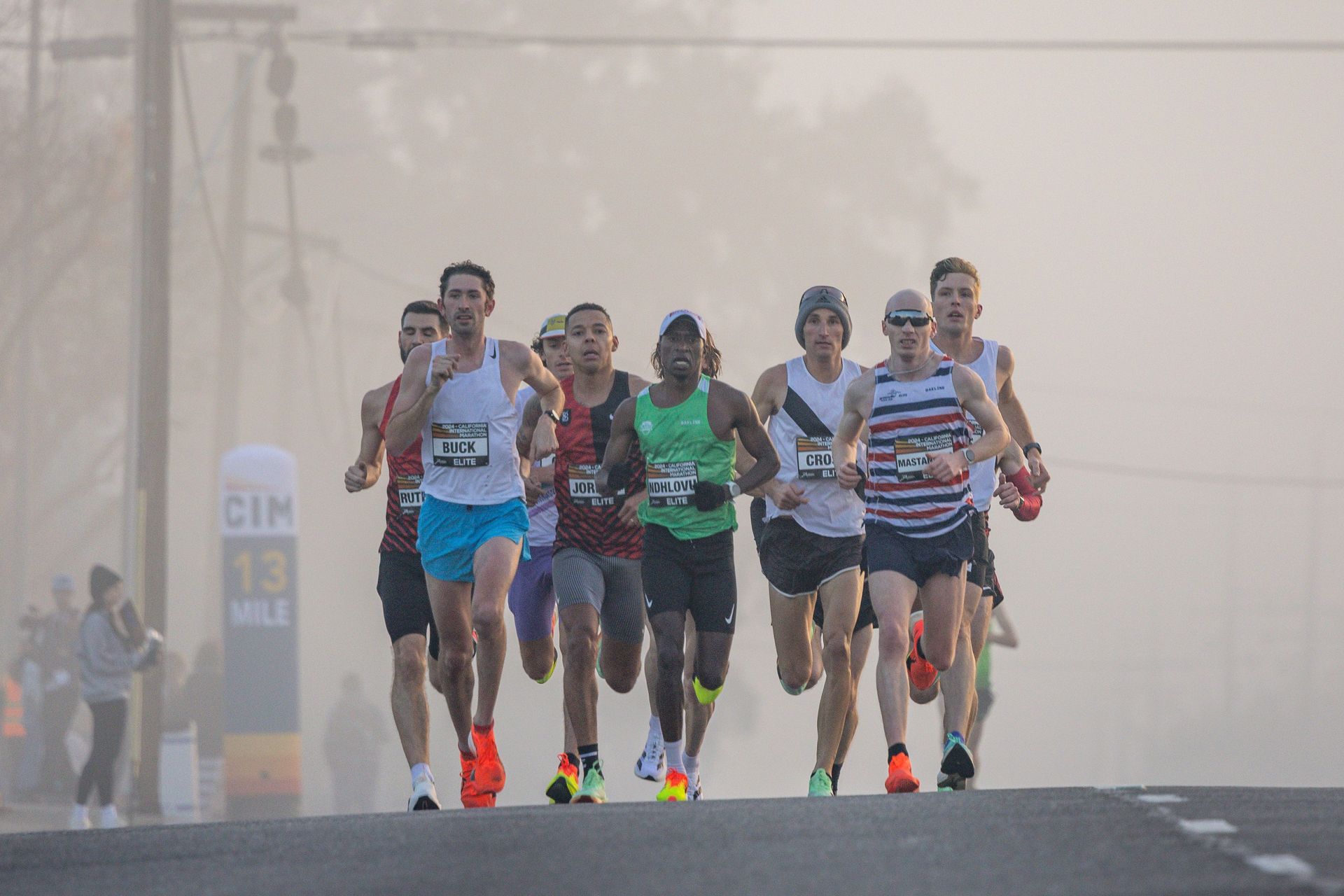
Race morning needs fewer decisions. Give the group a recommended schedule, but allow runners to follow their own warm-up and breakfast routine. Some will want porridge two hours before the start; others may prefer a banana and coffee. Do not make one breakfast arrangement compulsory.
Suggested race-day schedule
- 05:45 to 06:30: Individual breakfast and final kit check.
- 06:45: Optional group departure from accommodation.
- 07:15: Arrive near the start, allowing time for toilets and bag drop.
- 07:45: Club meeting point and group photograph.
- 08:00 onwards: Runners move to their waves or pens.
- After finishing: Collect belongings, rehydrate and meet at the agreed recovery point.
- From 12:30: Recovery lunch and relaxed afternoon.
- 19:00: Celebratory dinner, kept flexible for tired runners.
Race starts vary, so work backwards from the official timetable. Check walking distances rather than relying only on driving time. Road closures may make taxis or coaches impractical near the start, while a short walk can be the simplest option.
Transport, accommodation and group logistics
Transport is often what makes or breaks a group race weekend. Before booking, map the airport, accommodation, race village, start line and finish area. Look for one practical base rather than simply the cheapest rooms.
Consider the following:
- Can members reach the hotel by public transport, taxi or pre-booked transfer?
- Is there room for sports luggage, water bottles and drying kit?
- Can breakfast be served early on race morning?
- Are there twin, double and single room options?
- Is the finish close enough for tired runners to walk back?
For larger clubs, divide responsibilities. One person can manage accommodation, another transfers and another race information. A shared spreadsheet should record arrival times, room allocations, dietary requirements, emergency contacts and payment status.
When booking transfers, do not plan only for the fastest travellers. Allow space for luggage and expect delays. For a mixed group, two smaller vehicles may be more useful than one large vehicle with a rigid departure time.
Run clubs looking at broader sports travel ideas can also explore Sports Clubs & Teams , Trip Types or Hosted Trips .
Food, recovery and group time
Food should be reliable, familiar and easy to access. Pre-book restaurants for the main group meals, but avoid choosing a tasting menu or late-night venue before the race. Ask about allergies and dietary needs when collecting bookings, not on arrival.
Plan recovery into the itinerary rather than treating it as spare time. After the race, runners may need showers, compression, a quiet room, a gentle walk or simply time alone. A group lunch can work well if the venue accepts casual clothing and has enough space for tired guests.
On race evening, celebrate without making attendance obligatory. Faster runners and first-time finishers may want to share stories, while others may prefer a quiet meal. A flexible booking window or two nearby options can keep the weekend inclusive.

Sunday: Race day recovery and a calm final evening
The afternoon after the race should not be over-programmed. Offer one gentle social option, such as a waterfront walk, café visit or hotel pool, and let runners choose. Avoid scheduling a long excursion unless the group specifically wants one.
If the race takes place on Sunday, the itinerary above applies directly. If it takes place on Saturday, move race pack collection and the shakeout run to Friday, then use Sunday for recovery and a relaxed local activity.
Monday: Departure without a rushed finish
Departure times will differ, just as arrivals do. Publish checkout arrangements clearly and offer a final optional breakfast rather than requiring everyone to leave together.
Suggested departure plan
- 07:30 onwards: Breakfast and individual checkouts.
- 08:30: First transfer for early flights or trains.
- 10:00: Luggage storage for later departures.
- 10:30: Optional coffee or short walk.
- According to bookings: Staggered transfers to the airport or station.
Confirm who is responsible for room keys, unpaid extras and lost property. If the group is travelling by coach, set one firm departure point and allow extra time for loading luggage.
What should the organiser confirm before booking?
Use this final checklist before asking members to pay:
- Race entry requirements, start time and race pack collection rules.
- Cancellation terms, payment deadlines and rooming options.
- Airport, station and local transport arrangements.
- Restaurant capacity, menus and dietary information.
- Emergency contacts, insurance and relevant travel protections.
If you are hosting or coordinating travel for clients, read the guidance on Travel Package Regulations For Hosts , and review Trust and Protection . For support with the administration, visit Host With Us .
How can a run club plan its next race weekend?
A strong half marathon weekend is not about filling every hour. It is about removing avoidable decisions, making travel accessible for different arrival times and giving runners the right balance of preparation, company and recovery. Start with the race timetable, build the accommodation and transport plan around it, then add meals and optional social activities.
Use this three-night itinerary as a working template, adapt it to your destination and ask members what support they need before confirming arrangements. When you are ready to compare options or plan a group race weekend, ActiveXplore Travel can help you create a practical package for your club through activexplorevenues.co.uk .
Recent Posts